Every Miami real estate cycle has a neighborhood that's quietly ahead of where it's being priced. In 2018, that was Wynwood. In 2021, it was the Design District. In 2026, it's Edgewater, the bayside corridor between Downtown Miami and the Design District that has spent the last five years quietly accumulating the kind of architectural pedigree and demographic shift that historically precedes a sustained pricing breakout.
Where is Edgewater Miami?
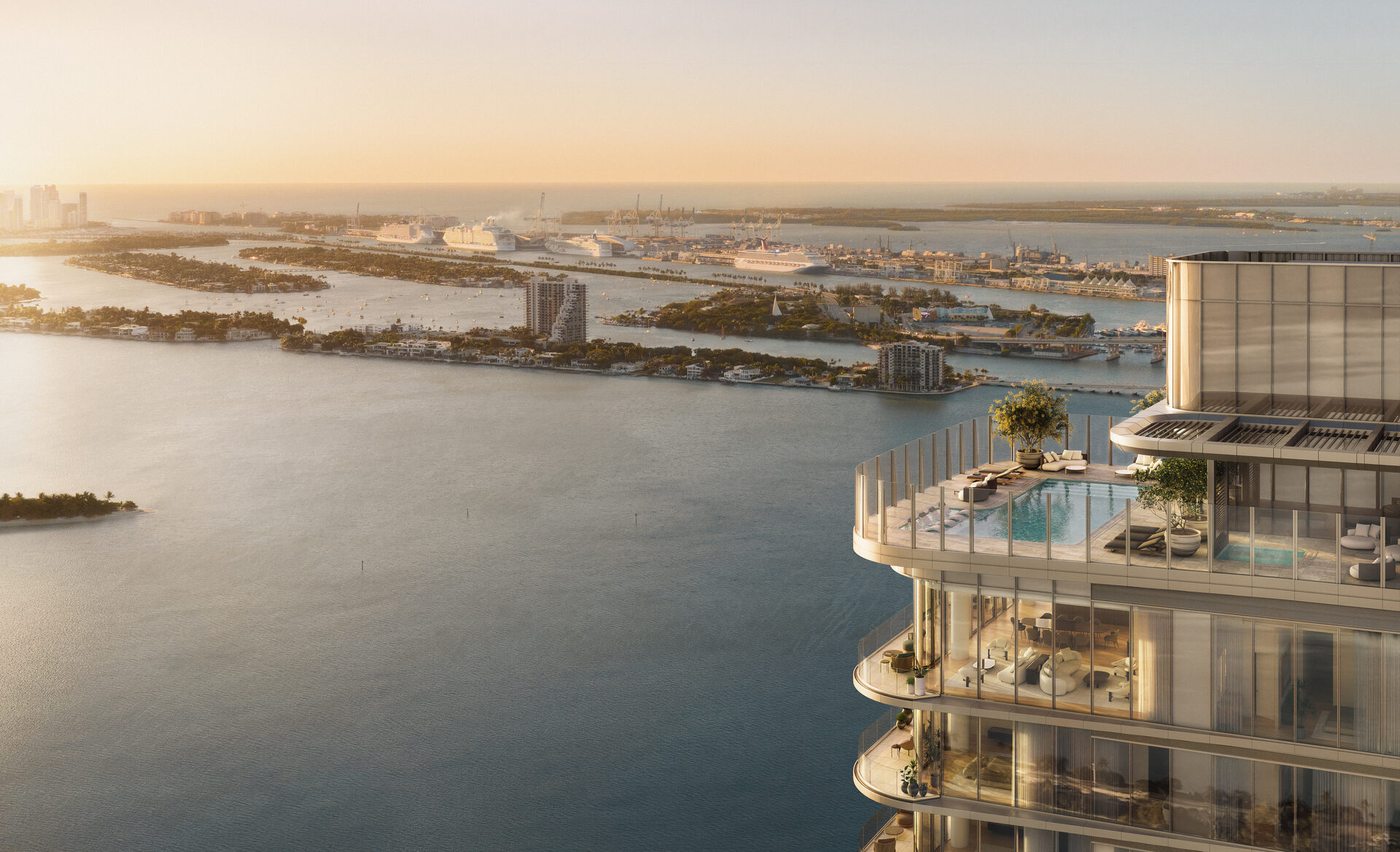
Edgewater runs along the western edge of Biscayne Bay from roughly NE 17th Street to NE 36th Street. It is bounded by Wynwood and Miami's Performing Arts District to the west, the Design District to the north, and Downtown Miami to the south. The neighborhood's spine is Biscayne Boulevard, but its luxury frontage is on the east side, the bayfront streets between Biscayne Bay and the boulevard. Margaret Pace Park sits at the center, a 7.5-acre bayfront park that anchors the residential community.
Critically, Edgewater is one of the only Miami neighborhoods where you can have direct bayfront access without paying island-premium pricing. Sunny Isles and Bal Harbour bayfronts are routinely $2,500-$4,000 per square foot. Brickell bayfront is $1,800-$2,800. Edgewater bayfront in 2026 is meaningfully below those numbers despite offering comparable water frontage and an arguably better walking neighborhood.
How does Edgewater compare to Brickell, Wynwood, and Miami Beach?
The four neighborhoods that compete for Miami's luxury pre-construction dollar each have a distinct profile:
- Brickell: The most established luxury market. Deep dining, walkable, big-tower amenity programs. Highest density. Most mature pricing. A market that is already mature.
- Miami Beach: The classic. Beachfront premium, established luxury hotels, world-class dining. Highest per-square-foot pricing. Constrained supply.
- Wynwood: The cultural neighborhood. Art-walk pedigree, strong restaurants, no bayfront. Lower-rise residential. Pricing has caught up with quality.
- Edgewater: Direct bayfront access at sub-Brickell prices. Adjacent to the Design District, Wynwood, and Downtown. The architectural pedigree of the pre-construction pipeline is the strongest indicator that Edgewater is the next neighborhood to converge upward.
The case for Edgewater is not that it's currently the most prestigious address in Miami. It isn't. The case is that the neighborhood is going through what real estate analysts call a "compositional shift", the residential product being built now is materially higher quality than the older buildings already in place, which means the average price per square foot will rise as new product replaces old stock.
Why is Edgewater attracting world-class architects?
The clearest signal of where capital is going is who is being hired to design it. In Edgewater's current pre-construction pipeline:
- LILLI: Adrian Smith + Gordon Gill Architecture (Burj Khalifa, UNA Residences)
- Aria Reserve: Arquitectonica
- Edge House Miami: Kobi Karp Architecture
- Missoni Baia: Asymptote Architecture
- Cove Miami: Arquitectonica
This is an unusually deep architect roster for a single neighborhood. When firms of this caliber commit to a submarket, it's because the underlying land economics and the buyer demographics make ambitious projects financially viable. The architects aren't predicting the future of Edgewater. They're confirming what the developers already know.
What makes Edgewater different from Sunny Isles and Bal Harbour?
Sunny Isles and Bal Harbour are the established Miami bayfront markets. Both offer beachfront product at the highest per-square-foot pricing in South Florida. Edgewater is structurally different in four ways:
- Edgewater is bayfront, not oceanfront, meaning calm water, sailing access, and more dramatic city skyline views
- Edgewater is in Miami proper, not in a separate island village, meaning faster access to the Design District, Wynwood, MIA, and Downtown
- Edgewater has emerging walkability. The Design District is a 5-minute drive, Wynwood is 6 minutes, Midtown restaurants are 4 minutes
- Edgewater pricing in 2026 is meaningfully below comparable Sunny Isles bayfront, even though the architects, finishes, and amenity programs are comparable
The case for Edgewater is not that it's the most prestigious Miami address today. It's that the architectural pipeline is building toward that.
Why is LILLI the best representation of the Edgewater thesis?
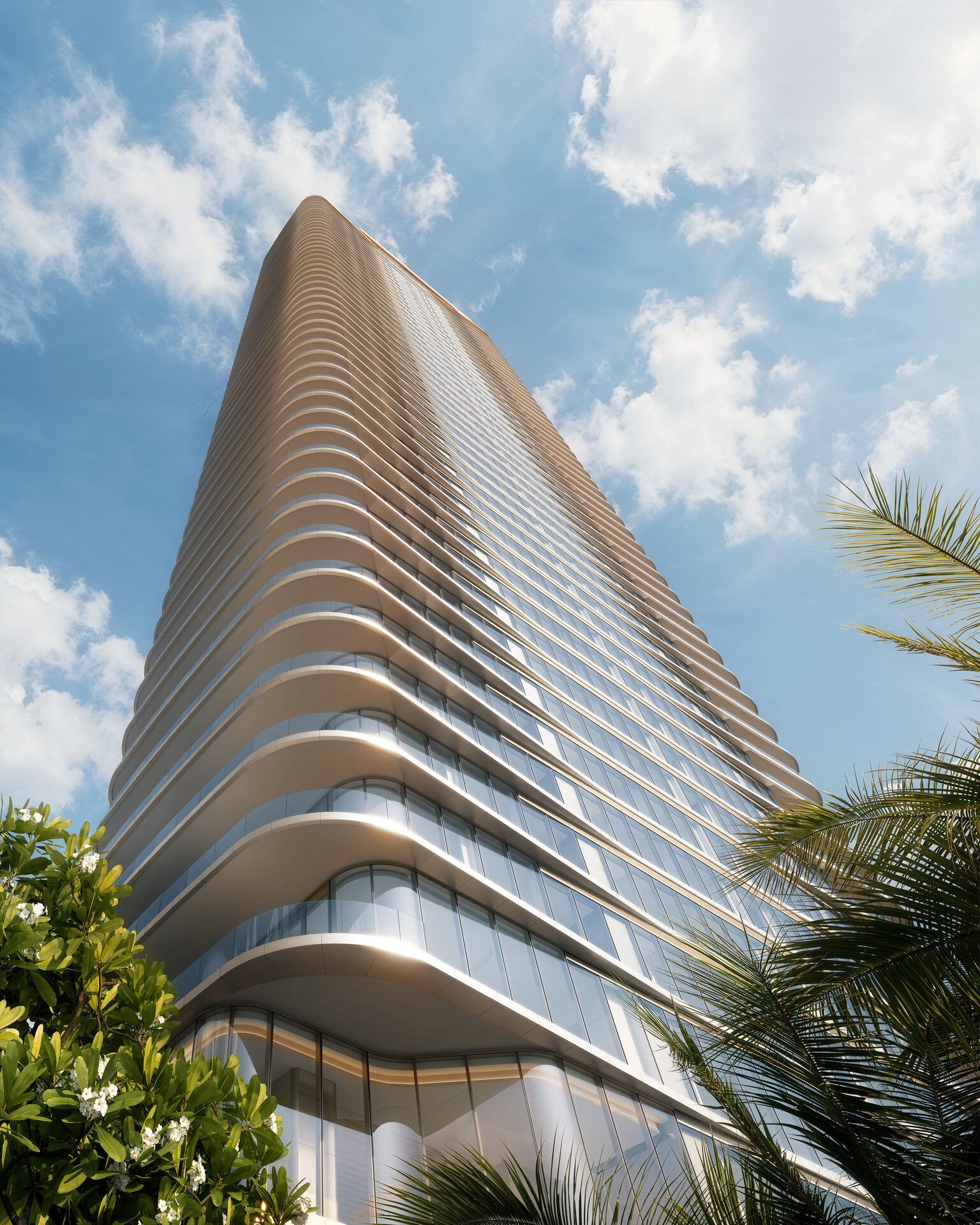
If you wanted to capture the Edgewater thesis in a single building, you would describe LILLI:
- Direct bayfront at 717 NE 27th Street, the center of the corridor
- Adrian Smith + Gordon Gill as both design architect and interior designer, the same firm behind the Burj Khalifa
- OKO Group as developer, the same developer behind Missoni Baia, UNA Residences, and Aman Residences
- 117 residences across 53 floors, boutique density at supertall height
- 10% deposit at contract on a standard pre-construction schedule that's competitive with comparable towers
LILLI is not the cheapest pre-construction in Edgewater. It is the one most likely to anchor the high end of the corridor's pricing as the neighborhood matures.
Who should consider Edgewater right now?
Edgewater is the right Miami submarket for three buyer profiles. First: buyers who want direct bayfront access without paying Sunny Isles or Bal Harbour premiums. Second: buyers who want proximity to the Design District, Wynwood, and Miami's cultural core without sacrificing waterfront living. Third: buyers who think in terms of the next five-to-ten-year price curve rather than the current sticker. For all three profiles, LILLI is the strongest pre-construction option currently available. Contact Adrian Sanchez at WIRE Miami for current pricing and floor inventory.
Frequently Asked Questions
Where is Edgewater Miami?
Edgewater is the bayside neighborhood between Downtown Miami and the Design District, running along Biscayne Bay from roughly NE 17th Street to NE 36th Street. It is bordered by Wynwood to the west, the Design District to the north, and Miami's Performing Arts District and Downtown to the south. Margaret Pace Park is the neighborhood's central green space.
How does Edgewater compare to Brickell for pre-construction value?
Edgewater offers comparable bay views, similar luxury finishes, and similar walkability at a typically lower price per square foot than Brickell's bayfront product. Brickell is the more established luxury market with deeper amenities and dining; Edgewater is the earlier-in-the-cycle bet as the corridor matures, and no appreciation is promised.
What is the best pre-construction tower in Edgewater right now?
The three most architecturally distinguished pre-construction towers in Edgewater are LILLI by OKO Group (designed by Adrian Smith + Gordon Gill), Aria Reserve, and Edge House Miami. LILLI's combination of a 117-unit boutique density, the ASGG single-firm design vision, and the bayside garden-and-rooftop amenity program makes it the strongest pre-construction value in the submarket.